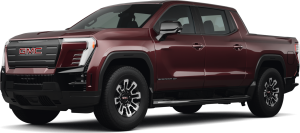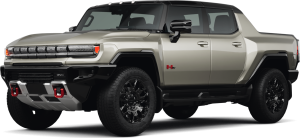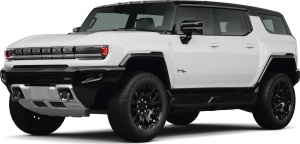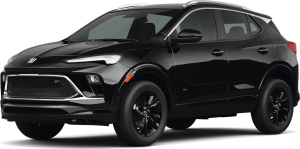
Why Spring Is the Best Time to Plan Your Winter Vehicle
Every October it happens the same way. The first snow falls on Moose Jaw, and by the next morning half the city is on the phone looking for something with all-wheel drive. By November, the good inventory is spoken for. By December, you're settling for whatever colour is left on the lot.
Smart Saskatchewan drivers do this differently. They plan in spring — while there's no urgency, no weather pressure, and months to research, test drive, and even custom order if they want something specific. You're not buying a winter vehicle in winter. You're making a calm, informed decision in April so that by the time the first ground blizzard tears across Highway 1, you're already behind the wheel of something that handles it.
And if you've ever driven the Moose Jaw to Regina corridor in a February whiteout — flat, exposed, visibility near zero, semis in the ditch every few kilometres — you know exactly why your vehicle choice matters. That 70-kilometre stretch of Highway 1 is one of the most unforgiving roads in southern Saskatchewan. It's also one of the most driven. What you're driving, how it handles packed snow and crosswinds, and whether you've got winter tires underneath you — those decisions make the difference.
This guide breaks down the GM SUVs and trucks that actually perform in Saskatchewan winters, from the Equinox AWD to the Silverado Z71. No hype, no overselling — just honest recommendations from a team that's driven these vehicles in the same conditions you face every winter.
AWD vs 4WD — What Actually Matters in Saskatchewan
This is the question we hear most at Murray GM, and it deserves a straight answer — not a sales pitch. AWD and 4WD do different things, and knowing the difference will save you money and frustration.
| Feature | AWD (All-Wheel Drive) | 4WD (Four-Wheel Drive) |
|---|---|---|
| How It Works | Always engaged or automatically activated. Distributes power to the wheels that need it, seamlessly. | Selectable by the driver. Typically offers 2WD, 4HI, and 4LO modes for different conditions. |
| Best For | Highway driving, packed snow, icy roads, daily commuting, family SUVs. | Deep snow, soft terrain, grid roads, off-highway use, towing in rugged conditions. |
| Saskatchewan Conditions | Handles ground blizzards, windblown packed snow, and icy highways very well. | Superior for getting unstuck on rural roads and deep snow accumulation. |
| Fuel Efficiency | Generally better — the system only activates rear drive when needed. | Lower fuel economy when engaged, especially in 4LO. |
| Vehicles | Equinox, Traverse, Acadia, Enclave | Tahoe, Yukon, Silverado, Sierra |
Here's the truth most people don't hear: for the majority of Moose Jaw commuters and Highway 1 drivers, AWD is actually better than 4WD for winter. Ground blizzards on flat, exposed highways are the real threat in southern Saskatchewan — not deep snow. AWD systems react faster than you can shift a transfer case, and they handle the kind of packed, windblown snow that covers Saskatchewan highways beautifully.
4WD is the right choice if you regularly drive grid roads, work on a farm, or need low-range gearing for serious off-highway conditions. Saskatchewan farmers and contractors know this — they need 4WD because they need to get into places most people don't go.
That's not a sales pitch against AWD or 4WD — it's physics. Winter tires use a softer rubber compound and deeper tread patterns specifically designed for temperatures below 7°C. According to CAA Saskatchewan, winter tires cut braking distances by up to two car lengths on ice compared to all-seasons. No drivetrain can do that.
The Best GM SUVs for Saskatchewan Winters
Every SUV below is available at Murray GM Moose Jaw. We've focused on the winter-relevant features that actually matter when the temperature drops to −35°C and the highway disappears behind blowing snow.
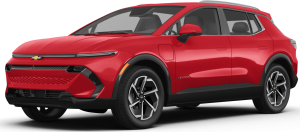
Chevrolet Equinox AWD
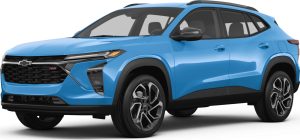
The Equinox is GM's entry-point family SUV, and it punches above its weight in winter. The 1.5L turbo engine paired with an 8-speed automatic provides smooth, predictable power delivery — exactly what you want on icy roads. Available AWD with the standard Drive Mode Selector lets you dial in the right response for changing conditions.
- Engine: 1.5L turbocharged 4-cylinder
- Drivetrain: Available AWD with Drive Mode Selector
- Winter essentials: Standard heated front seats and heated steering wheel, available remote start, over 15 standard safety and driver assistance features
- Cargo: Up to 63.5 cu. ft. with rear seats folded — enough room for hockey bags, winter emergency kits, and groceries
Honest note: The Equinox is a lighter vehicle, which means winter tires make an outsized difference on this SUV. Pair it with a good set of winters and you'll be surprised how well it handles the commute from south Moose Jaw to the schools and shops on the north end — or the highway run to Regina.
Chevrolet Traverse AWD
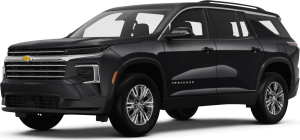
When you need three rows and real highway presence, the Traverse delivers. The redesigned model rides on GM's latest platform with a 2.5L turbocharged four-cylinder producing 328 horsepower and 326 lb-ft of torque — a significant step up from the previous-generation V6 it replaces, with better fuel economy to boot.
- Engine: 2.5L turbo 4-cylinder, 328 hp, 8-speed automatic
- Drivetrain: Available AWD; Z71 trim offers twin-clutch AWD with Terrain Mode and Hill Descent Control
- Winter strengths: At over 4,500 lbs curb weight, the Traverse feels planted in crosswind conditions on Highway 1. That mass is an advantage when gusts are pushing lighter vehicles around.
- Capacity: Seating for 7–8, up to 98 cu. ft. cargo with seats folded, 5,000 lbs towing
Best for: Families hauling kids to hockey tournaments in Regina or Saskatoon. The third row actually fits teenagers, and there's still room behind it for equipment bags.
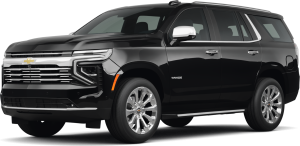
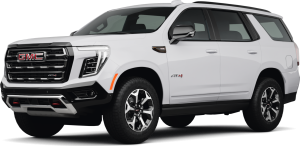
Chevrolet Tahoe / GMC Yukon 4WD
This is the Saskatchewan winter workhorse. Body-on-frame, V8 power, selectable 4WD — the Tahoe and Yukon are built for everything our province throws at them. They share the same platform and powertrains; the Yukon adds more standard luxury features including heated front and second-row seats, a heated steering wheel, and available Magnetic Ride Control that reads the road up to 1,000 times per second.
- Engines: 5.3L V8 (355 hp), available 6.2L V8 (420 hp), or 3.0L Duramax turbo-diesel (305 hp, 495 lb-ft)
- Drivetrain: Selectable 4WD with Auto, 2WD, 4HI, and 4LO modes — handles everything from icy Highway 1 to frozen grid roads
- Winter features: Remote start standard, available Air Ride Adaptive Suspension, HD Surround Vision for navigating snowbank-lined parking lots
- Towing: Up to 8,400+ lbs (Tahoe) depending on configuration
The Yukon AT4 trim deserves special mention for winter drivers: it adds 20-inch wheels with all-terrain tires, a high approach angle with front skid plate, and Magnetic Ride Control as standard equipment. If you need a premium full-size SUV that can handle both the school run and the grid road to the farm, this is it.
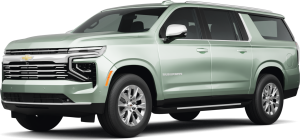
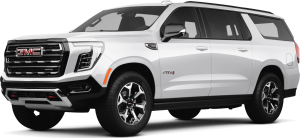
Chevrolet Suburban / GMC Yukon XL
Same capability as the Tahoe and Yukon, but with a longer wheelbase and significantly more cargo room behind the third row. If you're regularly hauling six people and their gear — think competitive hockey families, coaches, or anyone who needs interior space that a standard SUV can't provide — the Suburban and Yukon XL are the answer.
- Same powertrains and 4WD systems as Tahoe/Yukon
- Extended length: More cargo behind the third row means winter emergency gear, sports equipment, and luggage all fit without playing Tetris
- Highway stability: The longer wheelbase provides an even more planted feel in crosswinds
Best for: Large families, hockey coaches, anyone who's ever tried to fit five people and all their winter gear into a mid-size SUV and failed.
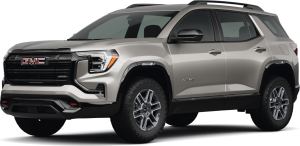
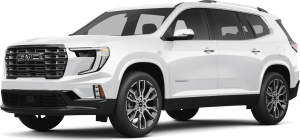
GMC Acadia AWD
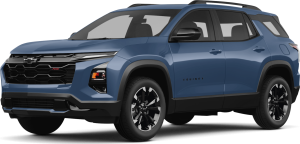
The redesigned Acadia sits between the Equinox and Traverse in size, but it's loaded with technology. The standard Traction Select System offers six drive modes to help you dial in the right response for changing Saskatchewan conditions — from dry highway to ice-covered intersections.
- Engine: 2.5L turbo 4-cylinder, 328 hp, 8-speed automatic
- Drivetrain: AWD standard on AT4 trim with Active Torque Control; available on Elevation and Denali
- Tech: 15-inch diagonal Premium GMC Infotainment System, over 19 standard safety features, available Super Cruise hands-free driving
- Capacity: Seating for up to 8, 97.5 cu. ft. max cargo, 5,000 lbs towing
The AT4 trim is particularly strong for Saskatchewan winters: it adds an off-road-tuned suspension, lifted ride height, 18-inch wheels with all-terrain tires, and an exclusive Terrain Mode for adverse conditions.
Buick Enclave AWD
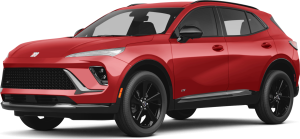
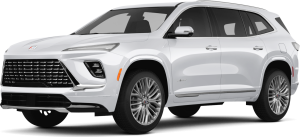
If your winter driving is primarily highway-focused and you value a quiet, refined cabin, the Buick Enclave deserves a look. It shares GM's latest platform and the same 328-hp 2.5L turbo engine as the Traverse and Acadia, but with a distinctly premium interior, available continuous damping control, and exceptional noise insulation.
- Engine: 2.5L turbo, 328 hp, 8-speed automatic
- Drivetrain: Available AWD with Driver Select modes
- Comfort: Quieter cabin than Traverse or Acadia — you'll appreciate this when wind noise from a ground blizzard is hammering the windows
- Capacity: 7 passengers, up to 97.5 cu. ft. cargo, 5,000 lbs towing capability with available Trailering Package
The Enclave is the right choice for highway-heavy drivers who want a comfortable, composed winter vehicle without the truck-like feel of a full-size SUV. Think Moose Jaw to Regina or Moose Jaw to Saskatoon — those 200+ km highway trips where ride quality really matters.
The Best GM Trucks for Winter in Saskatchewan
There's a reason more than half the vehicles on Saskatchewan roads in winter are trucks. They work year-round, they handle terrible conditions, and when properly equipped, they're among the safest vehicles on icy highways.
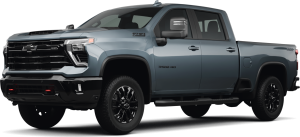
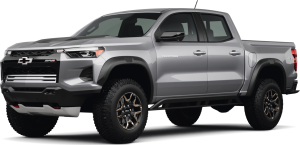
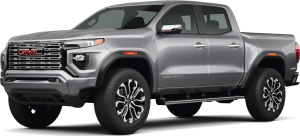
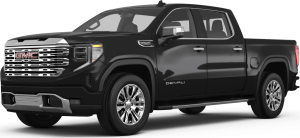
Chevrolet Silverado 1500 with Z71 Package
The most common winter vehicle in rural Saskatchewan — and there's a good reason for that. The Z71 Off-Road Package is specifically designed for the kind of mixed conditions Saskatchewan serves up: ice, packed snow, grid roads, and the occasional snowdrift across a country road.
- Engines: 2.7L TurboMax (310 hp, 430 lb-ft — best-in-class standard torque), available 5.3L V8 (355 hp), 6.2L V8 (420 hp), or 3.0L Duramax turbo-diesel
- Z71 Package: Autotrac 2-speed transfer case with Auto mode, skid plates, Rancho shocks, all-terrain tires, heavy-duty air filter, hill descent control
- Winter features: Remote start standard on most trims, block heater available, 730 cold-cranking amp heavy-duty battery, heated steering wheel standard on LT and above
- Towing: Up to 13,300 lbs with the Duramax diesel
The Autotrac transfer case in Auto mode is the key feature for winter. It automatically sends power to the front wheels when it detects slippage — you don't have to think about it. On Highway 1 in January, that means the truck is constantly managing traction for you. Switch to 4HI for grid roads or deeper snow, and you're in full control.
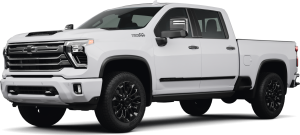
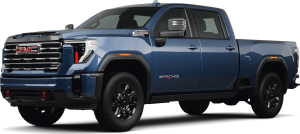
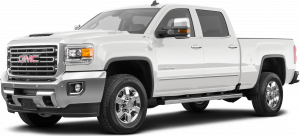
Chevrolet Silverado HD (2500 / 3500)
When capability isn't optional, the Silverado HD steps up. Heavier trucks provide more stability on icy highways — especially when loaded — and the Duramax diesel with full low-range 4WD can handle conditions that would leave smaller vehicles stranded.
- Engine options: 6.6L V8 gas or 6.6L Duramax turbo-diesel
- 4WD: Full-time or selectable 4WD with low range for extreme conditions
- Weight advantage: A loaded HD truck has a significantly lower centre of gravity than an empty half-ton — that translates directly to stability on ice
- Diesel note: Block heater critical below −25°C; use winter diesel and fuel conditioner below −30°C
Best for: Farmers, ranchers, contractors, and commercial operators who need capability year-round and want a vehicle that's as stable on a January highway as it is in a July hay field.
Cold Weather Reliability — What to Know at −40°C
Saskatchewan doesn't just get cold. It gets the kind of cold that tests vehicles in ways most engineers in Michigan never planned for. Here's how to keep your GM vehicle running reliably when the mercury drops off the bottom of the thermometer.
- Block Heaters — Use Them.
Every new GM vehicle comes equipped with a block heater. Plug in when temperatures drop below −20°C. Two to three hours before you need to leave is usually sufficient — overnight is fine and won't harm anything. A warm engine starts easier, warms up faster, puts less strain on your battery, and reaches operating temperature sooner, which means your cabin heater works faster too. - Battery — Cold Is the Killer.
At −40°C, a standard battery loses up to 60% of its cranking power. If your battery is four or more years old, get it tested before winter. The Silverado 1500 comes standard with a 730 cold-cranking amp heavy-duty battery — this matters when it's −38°C on a February morning in Moose Jaw. - Diesel Vehicles — Extra Attention Required.
Fuel gelling is real below −30°C. Use winter-blend diesel (with a lower cold filter plugging point), add fuel conditioner, and always plug in the block heater overnight in extreme cold. Never let a diesel sit unplugged outdoors in a Saskatchewan cold snap. The Duramax engines are reliable cold starters when plugged in — but no diesel likes a cold start without help. - Remote Start — Not a Luxury.
In Saskatchewan, remote start is vehicle preservation. Letting the engine warm up for 10–15 minutes before driving reduces wear on cold engine components, warms the transmission fluid, and ensures your cabin is defrosted and safe to drive. It's standard on most GM trims for a reason. - Tire Pressure — Check Monthly.
Tire pressure drops roughly 1 PSI for every 5.5°C drop in temperature. If you set your tires at 35 PSI in October, they could be below 28 PSI by January — that affects handling, braking, and fuel economy. Check monthly when it's cold, and remember that the pressure shown on a warm morning in the heated garage will drop once the tires are cold. - Winter Tires — The Most Impactful Upgrade.
We can't say this enough: winter tires are the single best investment for safe winter driving. They outperform all-season tires dramatically below 7°C, cutting stopping distances significantly on ice and snow. They're not mandatory in Saskatchewan, but CAA Saskatchewan strongly recommends them — and so do we. Ask us at Murray GM about tire options for your specific vehicle.
The Moose Jaw to Regina Highway — A Real-World Test
If you live in Moose Jaw, you drive Highway 1 to Regina. It's 70 kilometres of some of the most exposed highway in southern Saskatchewan — flat, open prairie with nothing to break the wind between here and the horizon. In winter, it's a real-world test of every vehicle that drives it.
The specific hazards on this corridor are well known to anyone who drives it regularly:
- Ground blizzards: Blowing snow that reduces visibility to near zero in minutes. The road surface can be clear, but you can't see the vehicle ahead of you. These happen on clear days — you don't need a snowfall for a ground blizzard.
- Black ice: Particularly dangerous near the creek crossings east of Moose Jaw, where moisture from the creek bed creates ice patches that are invisible at highway speed.
- Packed snow in passing lanes: The right lane gets plowed more frequently. The passing lanes can be a different surface entirely — transitioning between bare pavement and packed snow mid-lane-change is where vehicles without good traction systems get into trouble.
- Crosswind exposure: With nothing to break the wind, gusts can push lighter vehicles sideways. This is where a heavier SUV or truck has a genuine safety advantage.
What vehicle characteristics matter most on this specific highway?
- AWD or 4WD traction — essential for managing changing surface conditions
- Electronic stability control — standard on all modern GM vehicles, constantly working to keep you straight
- Strong headlights — for night driving in blowing snow, LED headlamps cut through better than halogen
- Heated steering wheel and seats — you want your hands on the wheel, not pulling off gloves. Every second of attention matters.
- Good windshield wiper coverage and rear defrost — visibility is survival on this highway
A Tahoe or Yukon feels planted and composed on this highway in any conditions. A Traverse or Equinox is confident with good winter tires. A Silverado with the Z71 Package is comfortable in virtually anything Highway 1 can throw at you. The key is matching the vehicle to your needs and making sure it's properly equipped for the conditions.
Spring Is the Right Time to Decide
If you've read this far, you're already thinking about next winter. Good — that's exactly the right approach. Here's why spring is your best window to act:
- Better inventory: Dealers are restocked after winter. You'll have more colour choices, more package options, and more trims to choose from than you will in October.
- No panic buying: You're making a decision based on research, not on last night's forecast. That's how smart vehicle purchases happen.
- Time to custom order: If you want a specific configuration — a particular engine, a colour that's not on the lot, or a package combination that's hard to find — spring gives you the lead time to order it and have it delivered well before winter.
- Stronger trade-in values: Trading in your current vehicle before the spring market softens typically means a better offer. Once fall inventory arrives, your trade-in competes with more pre-owned stock.
- Test drive in comfort: No rushing through a test drive because it's −30°C outside. Take your time, drive the vehicle properly, and make sure it's right for you and your family.
Whether you're looking at an Equinox for the family commute, a Traverse for the hockey trips to Regina, a Yukon for the ranch and the highway, or a Silverado for everything Saskatchewan demands — we can help you find the right fit.
Ready to Find Your Winter Vehicle?
Come see us at Murray GM Moose Jaw. No pressure, just honest advice from a team that drives these roads every day.
15 Chester Road, Moose Jaw, SK · murraygm.com